
Concrete Maintenance Tips to Maximize Your Investment
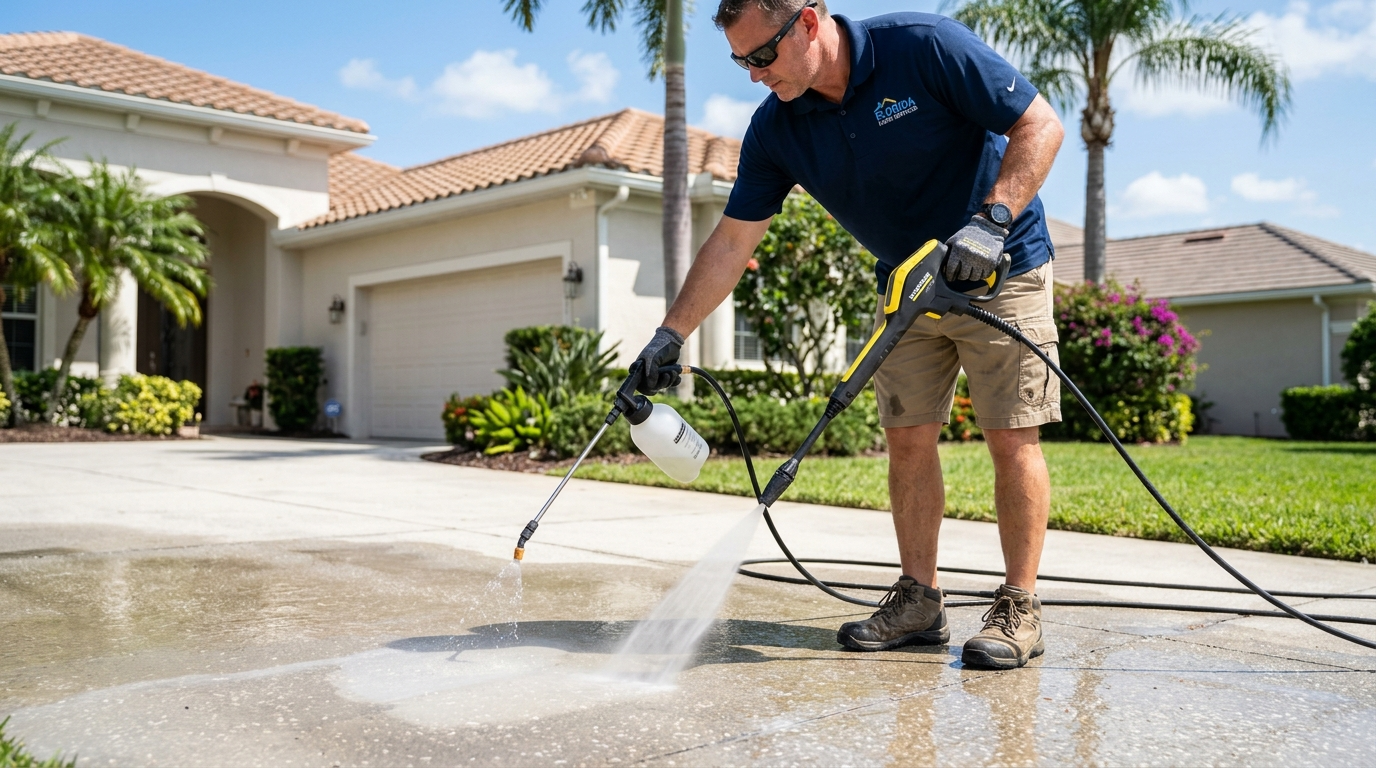
Concrete is one of the most durable building materials available, but in University Park, FL, “durable” doesn’t mean “indestructible” or “maintenance-free.” Florida’s intense UV radiation, heavy rainfall, high humidity, and active growing season create conditions that demand more from outdoor concrete maintenance than many homeowners expect.
The upside: a consistent, simple maintenance routine keeps your concrete looking great and dramatically extends its lifespan — potentially adding 15–25 years before replacement is necessary. This guide gives you the practical maintenance system that Florida concrete actually needs.
Professional Concrete Maintenance in University Park
We inspect, seal, clean, and repair concrete throughout the Sarasota-Bradenton area. Free estimates available.
Why Concrete Maintenance Matters More in Florida
University Park’s climate creates four distinct threats to outdoor concrete:
Intense UV radiation: Florida receives more solar radiation than almost any other U.S. state. UV breaks down concrete surface binders, attacks polymer-based sealers, and causes color fading in decorative concrete. Without protection, visible surface degradation begins within 5–7 years.
Heavy rainfall and moisture cycling: University Park receives approximately 53 inches of rain annually — much of it in intense summer thunderstorms. Water that infiltrates unsealed concrete erodes the fine cement particles, weakens the matrix, and can attack steel reinforcement.
Biological growth: Florida’s warm, humid climate makes algae, mold, mildew, and moss very aggressive growers on outdoor surfaces. This biological growth not only looks bad but physically degrades concrete surfaces over time.
Expansive soils: Manatee County’s clay-rich soils expand when wet and contract when dry, applying cyclical stress to concrete slabs. Properly maintained concrete handles this better than cracked, unsealed concrete.
The Florida Concrete Maintenance Calendar
Monthly Tasks (5 Minutes)
- Quick visual inspection: Walk your driveway, patio, sidewalks, and pool deck looking for new cracks, spalling, or drainage changes
- Clear drains and gutters: Ensure water can flow away from concrete surfaces after rain
- Redirect problem sprinklers: Sprinkler heads hitting concrete cause constant wet/dry cycling that accelerates deterioration
Spring Tasks (April–May, 2–4 Hours)
The start of the wet season is the best time for thorough maintenance before months of heavy rain:
- Deep pressure wash: Clean all concrete surfaces thoroughly before the rainy season begins. Use 1,500–2,500 psi for most residential concrete; be gentler on decorative surfaces
- Crack inspection and filling: Identify any cracks that developed over winter. Fill small cracks (under 1/4 inch) before the rainy season
- Drainage check: Confirm all drain inlets and swales are clear. Look for any areas where grade has shifted to direct water toward the house
- Sealer evaluation: Test whether your sealer is still functional (see the water test below)
Fall Tasks (October–November, 2–3 Hours)
After the rainy season, take stock of how your concrete fared:
- Post-storm season inspection: Look for new cracking, any settling or heaving, drainage changes
- Biological growth treatment: Algae and mold that built up during the rainy season should be cleaned before it has another year to degrade the surface
- Major sealing decision: Fall is an excellent time to reseal if due (see sealing schedule below)
- Crack repair before winter: Address any new or growing cracks before winter temperature cycling
Every 2–5 Years: Resealing
Resealing is the single highest-impact maintenance task for Florida concrete. See the detailed sealing section below.
Spring Concrete Inspection in University Park
University Park Concrete offers free concrete assessments. We'll identify what needs attention before the rainy season.
Concrete Sealing: The Most Important Maintenance Task
A quality sealer does four critical things for Florida concrete:
- Blocks UV radiation that breaks down the surface
- Prevents water infiltration that leads to base erosion and cracking
- Protects decorative surfaces (color, stamped patterns)
- Makes cleaning easier by preventing stain penetration
The Water Bead Test
Test your sealer’s condition: pour water on the concrete surface. If it beads into drops and rolls off, the sealer is functioning. If it soaks in immediately, the sealer has failed and it’s time to reseal.
Resealing Schedule for University Park
| Concrete Application | Sealer Type | Reseal Interval |
|---|---|---|
| Plain concrete driveway | Penetrating silane/siloxane | Every 5–7 years |
| Stamped/colored concrete | Acrylic | Every 2–4 years |
| Pool deck | Acrylic or polyurethane | Every 2–3 years |
| Garage floor (epoxy) | Epoxy or polyurethane | Every 5–10 years |
| Concrete patio | Penetrating or acrylic | Every 3–5 years |
The wide ranges reflect product quality differences. Budget-grade sealers need more frequent reapplication. For the best guide on sealer types, see our dedicated article: Why Concrete Sealing Is Essential in Florida.
Cleaning Your Concrete in Florida
Routine Pressure Washing
For most residential concrete in University Park:
- Frequency: 1–2 times per year, plus as needed for visible soiling
- Pressure: 1,500–2,000 psi for sealed surfaces; up to 3,000 psi for unsealed
- Technique: Work with the texture, not against it. Keep the wand moving to avoid etching.
- Soap: pH-neutral concrete cleaners are safe; avoid acidic or alkaline cleaners on sealed surfaces
Removing Algae and Mold (Very Common in Florida)
Green algae and black mold are nearly unavoidable on outdoor concrete in University Park’s humid climate:
- Apply diluted bleach solution (1 part bleach to 4 parts water) or commercial concrete cleaner
- Allow to dwell for 15–20 minutes
- Scrub with a stiff bristle brush
- Rinse thoroughly with water
Tip: Don’t use full-strength bleach repeatedly — it can degrade some sealers over time.
Oil and Grease Stains
Fresh stains are much easier to remove than set stains:
- Absorb fresh oil with kitty litter or absorbent powder — let sit 30 minutes, sweep up
- Apply commercial degreaser or Simple Green
- Let dwell 15–20 minutes, scrub, rinse
- For set stains, a concrete-specific degreaser and longer dwell time may be needed
- Multiple applications may be required for deeply set stains
Rust Stains
Rust from metal furniture, irrigation pipes, or rebar near the surface:
- Apply oxalic acid-based rust remover (available at hardware stores)
- Follow product instructions carefully
- Rinse completely after treatment
Crack Management: Catch Problems Early
The most important principle in concrete maintenance is addressing cracks before they become expensive:
Hairline Cracks (Under 1/16 inch)
- Monitor and seal with a penetrating concrete sealer
- These are mostly cosmetic and very common in Florida concrete
Small Cracks (1/16 – 1/4 inch)
- Fill with polyurethane or epoxy crack filler
- This prevents water infiltration that widens the crack
Large Cracks (Over 1/4 inch) or Displacement Cracks
- Call a professional for assessment
- May indicate subbase issues that require more than surface repair
For detailed crack guidance, see our concrete repair guide for University Park.
Protecting Concrete from Specific Hazards
From Tree Roots
One of the most common concrete problems in University Park:
- Keep large trees at least 10–15 feet from concrete slabs
- Install root barriers near existing concrete when planting new trees
- Monitor concrete near established trees annually for early root uplift signs
From Irrigation Systems
Sprinkler systems are a common source of concrete problems:
- Check and redirect any sprinkler heads hitting concrete
- Constant wet/dry cycling from sprinklers accelerates concrete deterioration significantly
- Check for underground leaks near concrete slabs
From Vehicle Traffic
For driveway concrete:
- Avoid parking extremely heavy vehicles (large RVs, loaded trucks) on residential driveways
- Keep the edges clear — tires on the edge of the slab can cause edge cracking
- Wait 7–10 days after a new pour before normal vehicle use, and 28 days before heavy loads
When DIY Maintenance Becomes a Pro Job
Know when to call a professional:
- Cracks wider than 1/2 inch or any displacement cracks
- Widespread spalling (flaking surface) over a large area
- Settlement visible to the naked eye (one section notably lower than adjacent)
- Water draining toward your home after grade changes
- Rust staining appearing (may indicate rebar corrosion inside)
University Park Concrete provides free assessments throughout the Sarasota-Bradenton area. See our service areas page for coverage.
The Cost of Neglect vs. Maintenance
To put this in perspective:
| Action | Approximate Cost |
|---|---|
| Professional sealing (600 sq ft driveway) | $600–$1,000 |
| Crack filling (minor cracks) | $200–$400 |
| Concrete resurfacing | $3–$8 per sq ft |
| Full driveway replacement | $5,000–$12,000 |
A $800 sealing job every 5 years — $4,000 over 25 years — versus a $10,000 replacement that proper maintenance could have deferred by 15–20 years. The math strongly favors consistent maintenance.
Professional Concrete Maintenance Starts Here
Call University Park Concrete for inspections, sealing, cleaning, and repairs throughout the Sarasota-Bradenton area.