
Concrete vs Asphalt Driveway: Which Is Better for Florida?
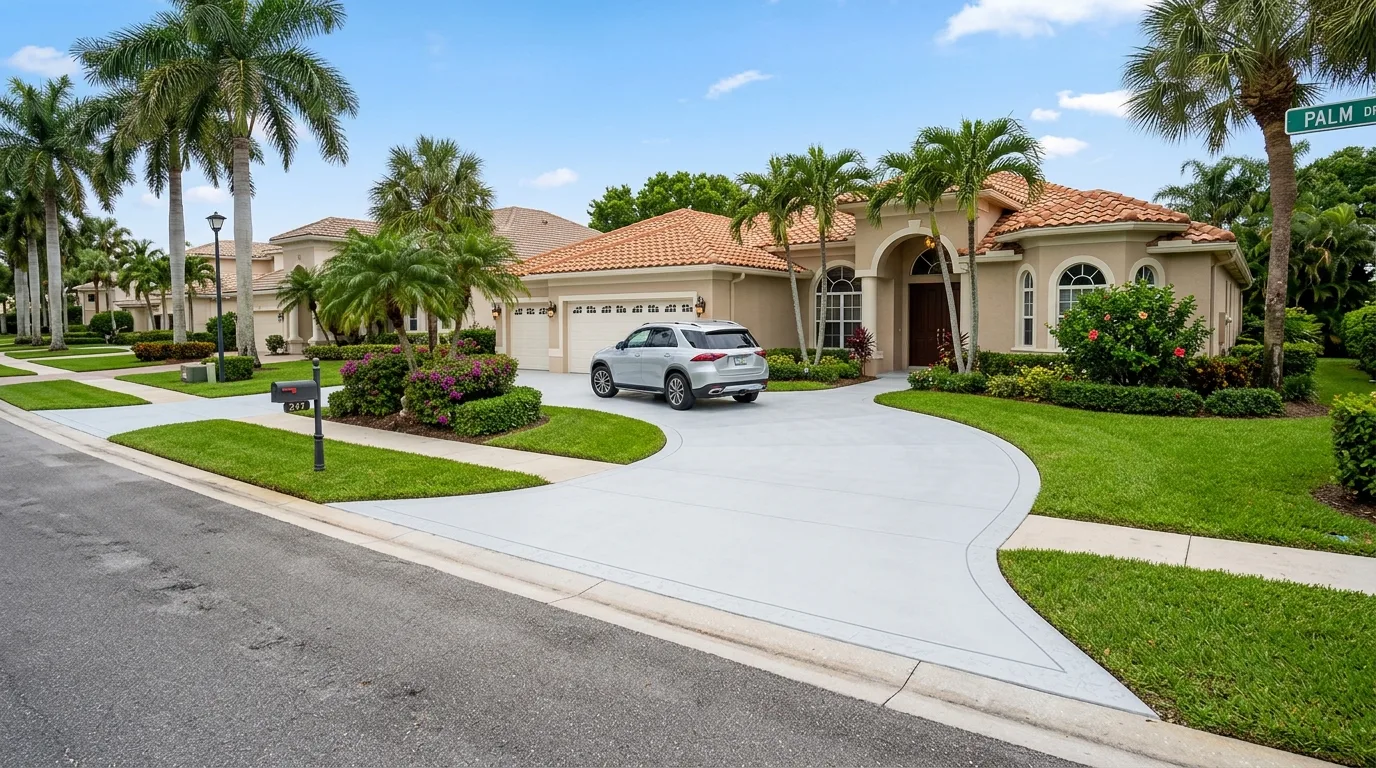
When it comes to choosing a driveway material in University Park and the greater Sarasota-Bradenton area, two options dominate the conversation: concrete and asphalt. Both have their proponents, but Florida’s unique climate makes this a more nuanced decision than it might be in, say, Minnesota. Let’s break down the real comparison for Florida homeowners.
Get Expert Advice on Your Driveway Options
Talk to University Park Concrete's team — free estimates, no pressure.
The Short Answer for Florida
For most University Park, FL homeowners, concrete is the better long-term investment. Here’s why: Florida’s intense heat actually works in concrete’s favor (it doesn’t soften like asphalt) and against it (thermal expansion causes cracking). With proper installation and reinforcement, however, a concrete driveway in Florida will typically outlast asphalt by 20+ years with significantly less maintenance.
Concrete Driveways: Pros and Cons in Florida
Advantages of Concrete in Florida
Durability in heat: Unlike asphalt, concrete doesn’t soften in Florida’s 95°F+ summer temperatures. Asphalt can actually become pliable on very hot days, leading to rutting under vehicle weight.
Longevity: Properly installed concrete in Florida typically lasts 30–50 years. Asphalt typically lasts 15–20 years.
Low maintenance: Once sealed, concrete needs minimal maintenance — just occasional resealing every 3–5 years and prompt attention to any cracks.
Aesthetic versatility: Concrete can be finished in dozens of ways — from basic broom finish to stamped patterns mimicking stone or brick. See our stamped concrete patio ideas for design inspiration.
Higher resale value: Real estate experts consistently note that concrete driveways add more curb appeal and resale value than asphalt.
No softening in heat: Crucial in Florida — concrete holds its structure even during the hottest summer days.
Disadvantages of Concrete in Florida
Higher upfront cost: Concrete costs roughly $6–$12 per sq ft vs. $3–$6 for asphalt.
Crack susceptibility: Florida’s expansive clay soils and the occasional temperature swing can cause concrete to crack. Proper base preparation, reinforcement, and control joint placement minimize this significantly.
Staining: Oil stains and rust can be more visible on light-colored concrete than on dark asphalt.
Repair matching: Patching concrete is more noticeable than patching asphalt — color matching is difficult.
Asphalt Driveways: Pros and Cons in Florida
Advantages of Asphalt in Florida
Lower upfront cost: Asphalt installation costs roughly 30–50% less than concrete.
Easier repairs: Cracks and damage can be filled and the entire surface can be overlaid, making repairs less visually obvious.
Better for DIY maintenance: Homeowners can apply asphalt sealer themselves.
Disadvantages of Asphalt in Florida
Softens in Florida heat: This is the biggest problem with asphalt in our climate. On very hot days, asphalt can soften enough to develop ruts under vehicles, especially near the garage door where cars sit for extended periods.
Shorter lifespan: Even well-maintained asphalt typically needs replacement in 15–20 years in Florida.
Requires more maintenance: Asphalt needs resealing every 1–3 years to prevent oxidation and cracking.
Environmental concerns: Asphalt contains petroleum products that can leach into groundwater.
Retains heat: Dark asphalt absorbs solar radiation, making surfaces uncomfortably hot to walk on barefoot — a real concern for families with children and pets in Florida.
Concrete Driveway Estimate for University Park
Free estimate, no obligation. Call 1(888)376-0955 or submit our form online.
20-Year Cost Comparison for a 500 Sq Ft Driveway
Let’s compare the actual lifetime costs:
Asphalt (500 sq ft)
- Initial installation: $2,500
- Resealing every 2 years (10x over 20 years): $1,500
- Mid-life overlay (year 10): $2,000
- Replacement at year 20: $2,500
- Total 20-year cost: ~$8,500
Concrete (500 sq ft)
- Initial installation: $4,500
- Resealing every 4 years (5x): $1,000
- Crack repairs over 20 years: $500
- Total 20-year cost: ~$6,000
Over 20 years, concrete is actually cheaper — despite the higher upfront cost.
What About Pavers?
Concrete pavers are a third option that’s popular in some Florida communities. Pavers offer beautiful aesthetics and individual replaceable units, but they cost $12–$25 per sq ft installed and require ongoing maintenance (weed/ant control, re-sanding). Read more in our decorative concrete options guide.
The Verdict: Best Driveway for University Park, FL
For University Park homeowners, concrete wins in nearly every category that matters for long-term value:
- Concrete handles Florida’s heat better (no softening)
- Concrete lasts longer (30–50 vs 15–20 years)
- Concrete costs less over a 20-year period
- Concrete looks better and adds more curb appeal
- Concrete offers far more design options
The only situations where asphalt might make more sense are:
- If you have a very tight budget and plan to sell the home within 5 years
- If you have very specific aesthetic preferences for a traditional dark driveway
Ready to Plan Your Concrete Driveway?
Check out our comprehensive concrete driveway cost guide for University Park for detailed pricing information, or use our free cost calculator to get an instant estimate.
We also offer a project assessment quiz to help you explore all your options and make the best decision for your property.
Get a Free Concrete Driveway Estimate
University Park Concrete serves University Park, Bradenton, Sarasota, Lakewood Ranch, and beyond.