
Signs Your Concrete Needs Repair in University Park FL
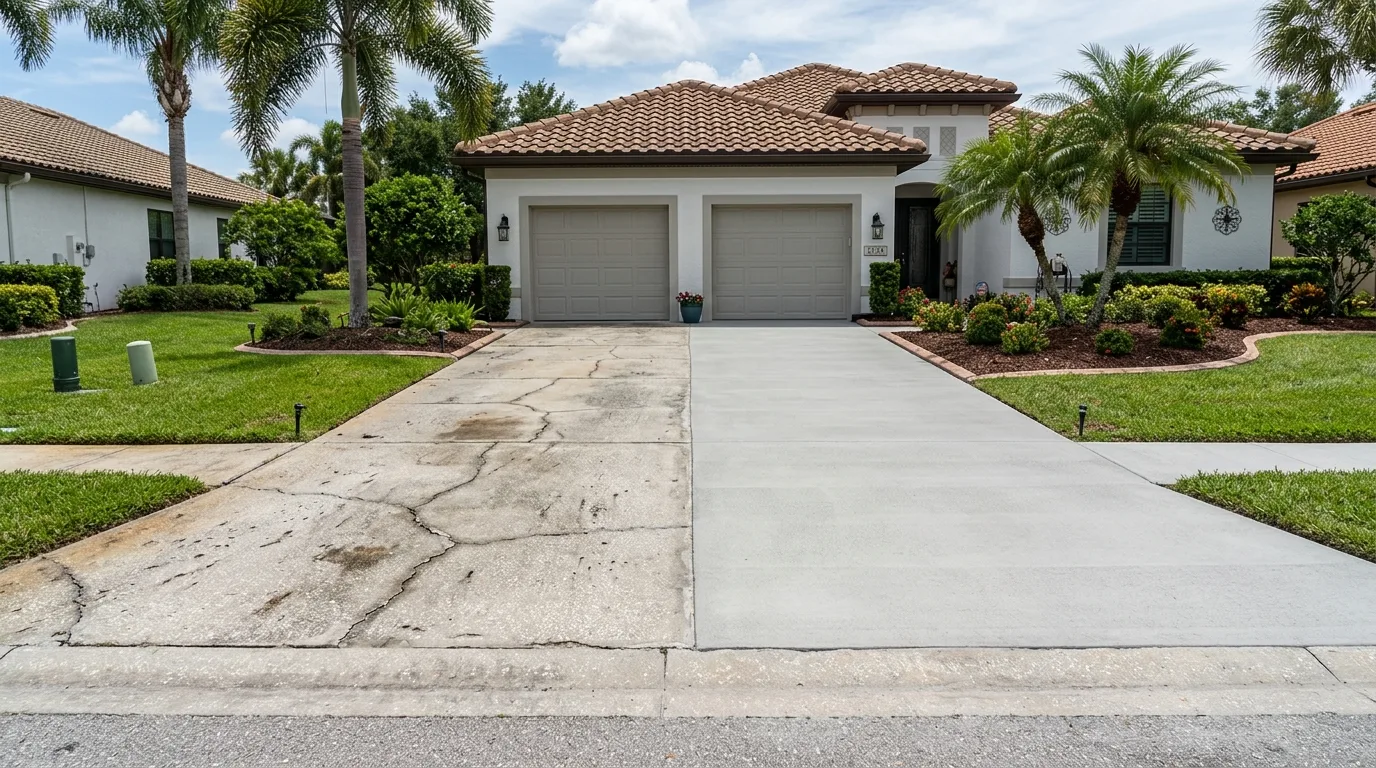
Concrete is one of the most durable building materials available — but it isn’t invincible. In University Park, FL, the combination of Florida’s expansive soils, intense UV radiation, heavy rainfall, and temperature cycling creates conditions that can stress even well-installed concrete over time.
Knowing the warning signs that your concrete needs attention is the key to catching problems early, when repairs are affordable, rather than late, when full replacement is the only option.
Free Concrete Inspection in University Park
Our experts will assess your concrete and give you an honest recommendation — no sales pressure.
Why Concrete Deteriorates in University Park, Florida
Before diving into the warning signs, it helps to understand why University Park concrete faces particular challenges:
Expansive soils: Manatee County’s clay-rich soils expand when wet and contract when dry. This movement exerts tremendous upward pressure on concrete slabs during wet season and then withdraws support during dry periods, causing flexing and cracking.
UV intensity: Florida receives more solar radiation than almost any other state. UV breaks down concrete surface binders and any sealers applied over them, accelerating surface degradation.
Heavy rainfall: University Park receives approximately 50–55 inches of rain annually, much of it in intense summer storms. Poorly drained areas around concrete can allow water to infiltrate the subbase, eroding support.
Temperature cycling: While Florida doesn’t have harsh freeze-thaw cycles, the daily temperature swings — especially in winter — create expansion and contraction stress in concrete over time.
Warning Sign #1: Surface Cracks
Cracks are the most obvious sign of concrete distress. However, not all cracks are equal:
Hairline Cracks (Less Than 1/16 Inch)
These thin surface cracks are extremely common in Florida concrete and often result from normal shrinkage during curing. Most are cosmetic in nature.
What to do: Monitor for growth. Seal with a penetrating concrete sealer to prevent water infiltration. Re-inspect every 6 months.
Moderate Cracks (1/16 to 1/4 Inch)
Wider cracks that have developed after the initial curing period often indicate soil movement or inadequate reinforcement.
What to do: Fill with a polyurethane or epoxy crack filler. Professional repair recommended if cracks are growing or if there are many of them.
Wide Cracks (Over 1/4 Inch)
Cracks this wide signal significant movement or structural stress. The concrete may be at risk of further deterioration.
What to do: Call a professional for assessment. Simple filling may not be enough — the underlying cause needs to be addressed.
Displacement Cracks
The most serious type: when the two sides of a crack are at different heights. This indicates that the ground beneath the slab has shifted unevenly.
What to do: This requires professional repair — typically involving stabilizing the subbase. In severe cases, section replacement is necessary.
Concerned About Cracks in Your Concrete?
University Park Concrete provides free, honest crack assessments with no obligation.
Warning Sign #2: Spalling and Surface Deterioration
Spalling occurs when the surface layer of concrete flakes, chips, or pops off in pieces. In University Park, spalling is often caused by:
- Long-term UV exposure without resealing
- Water infiltration that has caused subsurface pressure
- Poor original installation (too much water in the mix)
- Deicing chemicals (less common in Florida, but possible)
Mild spalling: Surface texture is rough and pitted, but the concrete below is sound. Resurfacing with a concrete overlay is a cost-effective solution.
Severe spalling: Deep pitting, exposed aggregate, or structural material breaking away. May require section replacement.
Warning Sign #3: Settlement and Uneven Surfaces
When sections of concrete sink lower than adjacent sections, the subbase beneath has settled or eroded. In University Park, this often happens near:
- Storm drain lines or irrigation pipes (water erosion under slab)
- Tree root zones
- Areas with poor original compaction
- Properties that have experienced significant water table changes
What to watch for: Trip hazards where one slab edge is higher than another. Water pooling toward the house foundation. Sections that have visibly tilted or dropped.
Repair options: Mudjacking (pressure-injecting material under the slab to raise it) or slab replacement, depending on extent.
Warning Sign #4: Concrete Staining and Discoloration
Staining alone doesn’t always indicate structural problems, but some stains are warning signs:
Rust-colored stains: May indicate that rebar or wire mesh inside the concrete is corroding. This is a structural concern — corroding steel expands and can cause the concrete above it to crack and spall from the inside.
White powdery deposits (efflorescence): Mineral salts leaching through from below. Indicates water movement through the concrete. Usually cosmetic but signals moisture infiltration issues.
Dark or black staining: Often algae, mold, or mildew growth. Common on shaded concrete in University Park’s humid climate. Usually cosmetic but can accelerate surface deterioration.
Warning Sign #5: Drainage Problems
Concrete that was once draining properly but now pools water is a warning sign that settlement has changed the slope. Even more concerning: concrete near a home where water now drains toward the foundation.
Drainage problems should be addressed promptly — standing water accelerates concrete deterioration and can cause foundation issues over time.
Warning Sign #6: Edge Deterioration
The edges and corners of concrete slabs are most vulnerable to chipping and cracking because they have less support. Early edge cracking often signals that the surrounding soil or base material has eroded or shifted.
Minor edge chips can be repaired with hydraulic cement or epoxy mortar. Severe edge deterioration may require replacing that section.
When to DIY vs. When to Call a Professional
DIY-Appropriate Situations
- Hairline cracks less than 1/16 inch
- Minor surface staining
- Small individual chips or edge cracks less than 2 inches
Call a Professional When
- Any crack wider than 1/4 inch
- Displacement cracks with height differences
- Multiple cracks forming a pattern across the slab
- Any area of spalling larger than a dinner plate
- Settlement visible to the naked eye
- Water draining toward your home’s foundation
- Rust staining (possible reinforcement corrosion)
Concrete Repair Costs in University Park, FL
For budgeting purposes:
- Hairline crack sealing (DIY): $20–$50 in materials
- Professional crack repair: $300–$800 depending on extent
- Concrete resurfacing: $3–$8 per sq ft
- Slab lifting/mudjacking: $500–$1,500 per section
- Partial slab replacement: $1,200–$5,000+
- Full driveway replacement: $4,000–$12,000+
Use our free cost calculator for a quick estimate, or contact us for an accurate assessment.
The Cost of Waiting
The most important point about concrete repair: problems that cost $300 to fix today may cost $3,000 to fix in two years if ignored. A hairline crack that allows water to infiltrate the subbase will widen as the base erodes. Surface spalling that exposes aggregate will accelerate once the protective cement layer is compromised.
Early intervention is almost always the most economical approach. If you’re seeing warning signs, get an assessment now rather than waiting for the problem to compound.
Get a Free Concrete Assessment Today
University Park Concrete provides honest evaluations throughout the Sarasota-Bradenton area. Call us to schedule.