
Why Concrete Sealing Is Essential in Florida's Heat and Rain
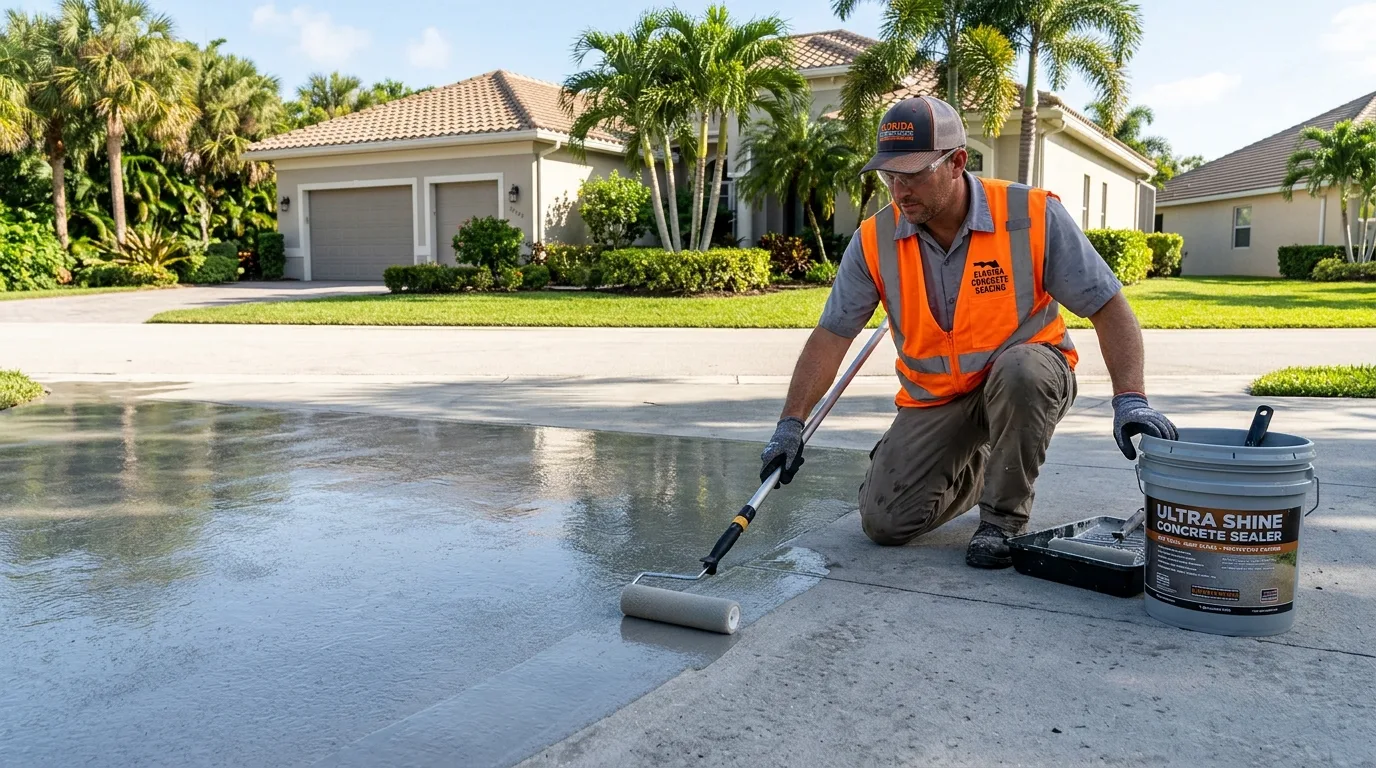
If you’re a homeowner in University Park, FL, concrete sealing isn’t optional — it’s essential maintenance. Florida’s unique combination of extreme UV radiation, heavy rainfall, high humidity, and chemical exposure creates conditions that accelerate concrete deterioration at rates homeowners from northern states simply don’t anticipate.
The good news: a quality sealing program can double or even triple the life of your concrete investment. This guide explains why concrete sealing matters in Florida, what types of sealers work best, and what you can expect to pay for professional sealing services.
Professional Concrete Sealing in University Park
Protect your investment with professional-grade sealers. Free estimates available.
Florida’s Unique Threats to Concrete
Understanding why sealing is so critical here starts with understanding what University Park’s climate does to concrete:
UV Radiation: Florida’s #1 Concrete Threat
Florida receives among the highest UV radiation levels in the continental United States. UV breaks down the surface binders in concrete, attacking:
- The cement paste that holds aggregate together
- Any pigments in colored or stamped concrete
- Polymer-based sealers (which is why Florida requires more frequent resealing than northern climates)
Without protection, unsealed concrete in University Park will show visible surface degradation within 5–7 years. Sealed concrete maintains its integrity and appearance for decades.
Heavy Rainfall and Water Infiltration
University Park receives approximately 53 inches of rain annually, much of it falling in concentrated summer storms. Water that infiltrates unsealed concrete:
- Erodes the fine particles in the cement matrix
- Can cause pressure buildup that leads to spalling (surface popping)
- Promotes carbonation of concrete, reducing its pH and accelerating rebar corrosion
- Washes away fine material from the subbase, causing settlement and cracking
High Humidity
Florida’s year-round high humidity means concrete surfaces rarely fully dry out. Sustained surface moisture promotes:
- Algae and mold growth (the green and black staining common on Florida concrete)
- Continued moisture movement through the slab
- Efflorescence (white mineral deposits from mineral-laden water migrating through the concrete)
Sealed concrete resists moisture penetration, dramatically reducing all of these issues.
Chemical Exposure
University Park concrete faces a variety of chemical threats that aren’t as prevalent in other climates:
- Pool chemicals: Pool owners splash chlorine-laden water onto adjacent pool decks
- Fertilizers: Florida’s year-round lawn care means concrete is regularly exposed to fertilizer
- Salt air: Proximity to the Gulf or bay introduces chloride salts that attack concrete and rebar
- Tire rubber: Vehicle driveways see tire marks and petroleum products that stain unsealed concrete
Types of Concrete Sealers for Florida
Not all sealers perform equally in Florida’s demanding environment. Here’s a guide to choosing the right sealer:
Penetrating Silane/Siloxane Sealers
Best for: Driveways, sidewalks, foundations, and any concrete you want to protect without changing appearance
How they work: Penetrate into the concrete and react chemically with the cement to form a water-repellent barrier within the concrete itself — not on the surface
Florida advantages:
- Won’t peel or blister in Florida’s heat
- Breathable, so moisture can escape from below
- UV-stable (don’t break down in sunlight)
- Last 7–10 years even in Florida’s climate
Cost: $0.50–$1.50 per sq ft for materials; $1.50–$3 per sq ft professionally applied
Acrylic Sealers
Best for: Stamped concrete, colored concrete, decorative surfaces, pool decks
How they work: Form a protective film on the concrete surface that enhances color and provides a wet look or matte sheen
Florida advantages and disadvantages:
- Great color enhancement for decorative concrete
- Good UV resistance in high-quality formulations
- Florida’s UV does break them down — expect 2–4 years before recoating
- Can become slippery when wet if no anti-slip additive is used
Cost: $0.30–$0.80 per sq ft for materials; $1–$2.50 per sq ft professionally applied
Polyurethane Sealers
Best for: Garage floors, commercial concrete, high-traffic areas
How they work: Form a very hard, chemical-resistant film on the concrete surface
Florida advantages:
- Excellent chemical resistance (great for garage floors exposed to oils)
- Very hard and abrasion-resistant
- Last 5–10 years
Cost: $0.80–$2 per sq ft for materials; $2–$4 per sq ft professionally applied
Epoxy Sealers
Best for: Interior and garage floors, commercial settings
How they work: Two-part reactive system that creates an extremely hard, durable surface coating
Florida notes: High-build epoxy floors are excellent for garages but not recommended for exterior applications where UV exposure will cause yellowing and peeling
Cost: $2–$5 per sq ft materials and labor for a basic epoxy floor
Not Sure Which Sealer Is Right for You?
University Park Concrete will recommend the right sealer for your specific application and budget.
How Often Should You Reseal Concrete in Florida?
Florida requires more frequent resealing than most states due to UV intensity and rainfall:
| Concrete Type | Sealer Type | Resealing Interval in Florida |
|---|---|---|
| Plain concrete driveway | Penetrating silane | Every 5–7 years |
| Stamped/colored concrete | Acrylic | Every 2–4 years |
| Pool deck | Acrylic or polyurethane | Every 2–3 years |
| Garage floor (epoxy) | Epoxy or polyurethane | Every 5–10 years |
| Concrete patio | Acrylic or penetrating | Every 3–5 years |
| Foundation/walls | Penetrating silane | Every 7–10 years |
The wide ranges reflect differences in product quality. Budget-grade sealers need more frequent reapplication. Premium professional-grade sealers last longer and provide better protection.
Signs Your Concrete Needs Resealing
How do you know when it’s time? Look for:
- Water no longer beads on the surface: The classic test — pour water on the concrete. If it beads into drops, sealer is working. If it soaks in immediately, the sealer has failed.
- Surface appears dull or chalky: The sealer film has broken down
- Color fading in stamped or decorative concrete
- Algae or mold growth on the surface
- Stains penetrating easily from oil, leaves, or other materials
- General surface weathering or slight pitting
DIY Sealing vs. Professional Sealing
For small areas, motivated DIY homeowners can achieve decent results. For driveways, large patios, or decorative concrete, professional application is strongly recommended:
Why professional sealing produces better results:
- Surface prep is critical and professionals have the right equipment
- Commercial-grade products not available to consumers
- Proper coverage rate ensures uniform protection
- Experience identifying areas that need repair before sealing
- Warranties on professional work
DIY sealing cost: $0.50–$1.50 per sq ft in materials for a 400 sq ft driveway ($200–$600 in materials)
Professional sealing cost: $1.50–$3.50 per sq ft for most applications in University Park, including prep ($600–$1,400 for a typical driveway)
The Return on Investment for Concrete Sealing
Let’s look at the numbers for a typical University Park homeowner:
- Cost of sealing a concrete driveway every 5 years: $600–$1,000 per application
- Lifespan extension: From ~25 years to 40+ years (15+ additional years)
- Cost of driveway replacement: $5,000–$12,000
The math is clear: regular sealing pays for itself many times over. Even one deferred replacement cycle more than covers a decade of sealing costs.
What to Expect From a Professional Sealing Job
When you hire University Park Concrete for sealing services, here’s the process:
- Surface preparation: Pressure washing to remove dirt, algae, and old sealer residue
- Crack inspection: Any cracks are identified and filled before sealing
- Drying time: Concrete must be fully dry before sealing (typically 24–48 hours after washing)
- Sealer application: Applied by sprayer, roller, or brush depending on the product and surface
- Cure time: Most sealers require 24–48 hours to cure before foot traffic and 72 hours before vehicle traffic
We service University Park and all surrounding areas including Bradenton, Sarasota, and Lakewood Ranch.
Protect Your Concrete Investment
Get professional concrete sealing for your University Park property. Free estimates, no obligation.