
Best Time of Year to Pour Concrete in Florida
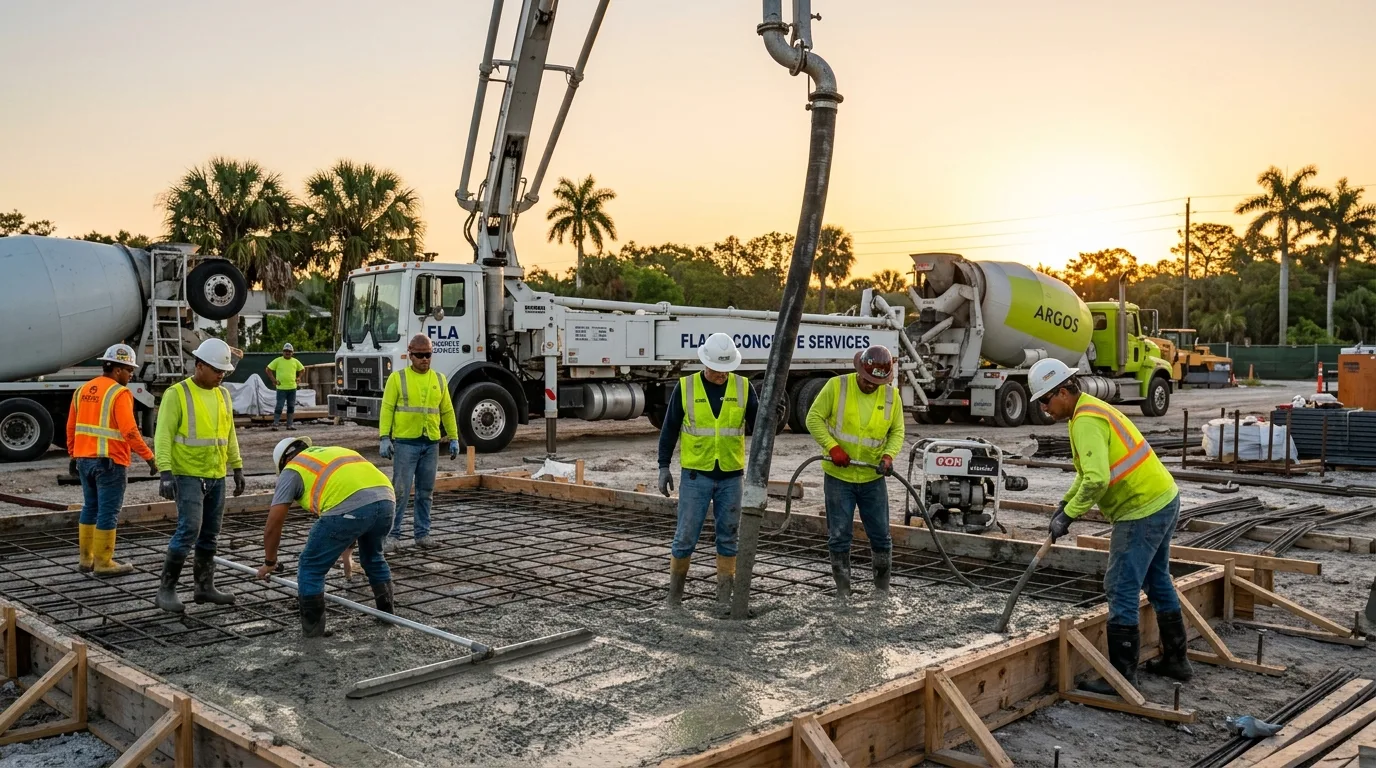
Florida has a year-round construction season — unlike northern states where concrete work stops in winter — but that doesn’t mean all months are equally good for concrete pours in University Park. Understanding how Florida’s seasonal weather patterns affect concrete is essential for planning a project that will cure properly and last for decades.
The short answer: October through April offers the most favorable concrete pouring conditions in University Park and the Sarasota-Bradenton area. But with the right preparation, professional contractors can achieve excellent results year-round.
Ready to Start Your Concrete Project?
University Park Concrete plans every pour around optimal conditions. Free estimates available year-round.
How Weather Affects Concrete Pours
Before diving into the seasonal breakdown, it’s important to understand what environmental factors matter most for a successful concrete pour:
Temperature
Concrete curing is a chemical reaction (hydration) that works best at temperatures between 50°F and 85°F. Outside this range:
- Too hot (above 90°F): Hydration accelerates, reducing working time and potentially leading to premature surface drying, cracking, and reduced strength
- Too cold (below 40°F): Hydration slows dramatically; if concrete freezes during curing, it can permanently damage the concrete’s structure
Humidity
Florida’s high humidity is actually beneficial for concrete curing — it slows moisture evaporation from the surface, reducing the risk of plastic shrinkage cracking. In northern states, contractors must actively work to keep concrete from drying out; in Florida, the environment naturally helps.
Rain
Rain on freshly poured concrete is a serious problem. Even light rain can:
- Wash away the surface cement paste, weakening the top layer
- Create surface pitting and laitance (a weak, dusty layer)
- Dilute the water/cement ratio at the surface, reducing strength
This is why skilled contractors monitor weather forecasts carefully and have contingency plans (plastic sheeting, tarps) ready.
Wind
High winds increase evaporation from the concrete surface, which can cause plastic shrinkage cracking — surface cracks that form before the concrete has hardened. Florida’s summer thunderstorm fronts often bring sudden wind gusts that can catch contractors off guard.
Florida’s Seasonal Weather: Month-by-Month Concrete Assessment
October – November: Excellent
These are the ideal months for concrete pours in University Park. The rainy season has ended, temperatures have dropped to comfortable ranges (highs in the 80s, lows in the 60s–70s), humidity is lower, and afternoon thunderstorms are rare.
- Average high: 82–86°F
- Average low: 60–70°F
- Rain risk: Low (dry season beginning)
- Recommended for: All concrete projects, including large commercial pours
December – February: Very Good
Winter in University Park brings the region’s most reliable weather for concrete. Temperatures are mild, rainfall is minimal, and humidity is at its annual low. The main risk is an occasional cold front that can briefly bring temperatures below 50°F — professional contractors monitor these carefully.
- Average high: 70–78°F
- Average low: 50–62°F
- Rain risk: Low to moderate
- Cold front risk: Monitor forecasts for sub-50°F nights within 24 hours of pour
- Recommended for: Large projects where optimal conditions matter most
March – April: Excellent to Good
Early spring is another excellent window before the summer heat sets in. March is typically very dry and mild. April begins to see increasing afternoon shower activity but is generally still manageable.
- Average high: 78–88°F
- Average low: 60–72°F
- Rain risk: Low to moderate, increasing through April
- Recommended for: All concrete projects
May: Good with Monitoring
May is transitional — temperatures begin climbing significantly and afternoon showers become more frequent as the Gulf moisture increases. Projects can be successfully completed in May with morning pours and careful weather monitoring.
- Average high: 88–92°F
- Average low: 68–76°F
- Rain risk: Moderate, increasing
- Recommended: Morning pours, have rain contingency plan ready
June – September: Challenging but Manageable
Florida’s wet season runs June through September, and University Park sees the majority of its annual rainfall during these months. Summer concrete pours are common — Florida doesn’t shut down construction for summer — but require more careful management.
Challenges:
- Daily afternoon thunderstorms (typically developing between 2–5 PM)
- Temperatures above 90°F by 10 AM most days
- High humidity can actually help curing but makes conditions uncomfortable for workers
- Strong thunderstorm cells can arrive with less than 30 minutes warning
Professional solutions:
-
Schedule pours to begin at first light (6–7 AM) so finishing is complete before afternoon storms
-
Use set retarders in the concrete mix to extend working time in heat
-
Have weather monitoring apps and alerts active throughout the pour
-
Keep tarps and plastic sheeting ready for unexpected rain
-
Use shade structure or wet curing methods during extreme heat
-
Average high: 90–93°F
-
Average low: 72–78°F
-
Rain risk: High (50–60% chance daily afternoon showers)
-
Recommended: Early morning pours, experienced contractor required, close weather monitoring
Concrete Projects Year-Round in University Park
Our team manages weather conditions for successful pours in any season. Call for your free estimate.
Tips for Successful Concrete in Florida’s Summer Heat
If your project can’t wait for cooler months, here’s how professional contractors manage summer pours:
Timing
- Pour at dawn: Starting at 6–7 AM means most of the pour and finishing work is complete by 10–11 AM, before peak heat
- Avoid afternoon pours: Between 12 PM and 6 PM, temperatures and evaporation are at their worst
- Check 72-hour forecasts: Avoid scheduling when afternoon storms are expected to be stronger than usual
Concrete Mix Adjustments
- Set retarders: Chemical admixtures that slow the hydration reaction, extending working time by 1–2 hours in hot weather
- Ice water: Using chilled water (or ice) in the mix keeps initial concrete temperature lower
- Fly ash replacement: Replacing a portion of cement with fly ash slows heat generation during hydration
Surface Protection
- Evaporation retarder spray: Applied to the surface immediately after screeding to reduce surface drying
- Sun shades: Temporary shade structures protect freshly poured surfaces from direct sun
- Wet curing: Keeping the surface damp with burlap and water or curing compounds prevents rapid drying
Planning Your Project: Lead Times
Regardless of the season, scheduling a professional concrete contractor in University Park requires some lead time:
- High season (Nov–March): Contractors are busy; plan 2–4 weeks ahead for scheduling
- Off season (June–Sept): More scheduling flexibility, but plan for weather delays
- Permit approval time: Allow 2–3 weeks for permit approval if required (see our Manatee County permits guide)
The Bottom Line: Best Time for Concrete in University Park
For University Park homeowners with scheduling flexibility, the ideal window is November through April. This period offers the most favorable combination of:
- Comfortable working temperatures
- Low rainfall probability
- Lower risk of weather delays
- Optimal curing conditions without special interventions
That said, quality contractors complete successful concrete projects throughout Florida’s summer with proper planning. If your project needs to happen during the wet season, choosing an experienced contractor who understands Florida’s summer concrete challenges is even more important than usual.
Use our project assessment quiz to evaluate your project readiness, or our cost calculator to start planning your budget. Contact University Park Concrete to discuss scheduling and get your free estimate.
Plan Your Concrete Project for Optimal Results
University Park Concrete schedules pours strategically around Florida's weather. Call to discuss your project timeline.